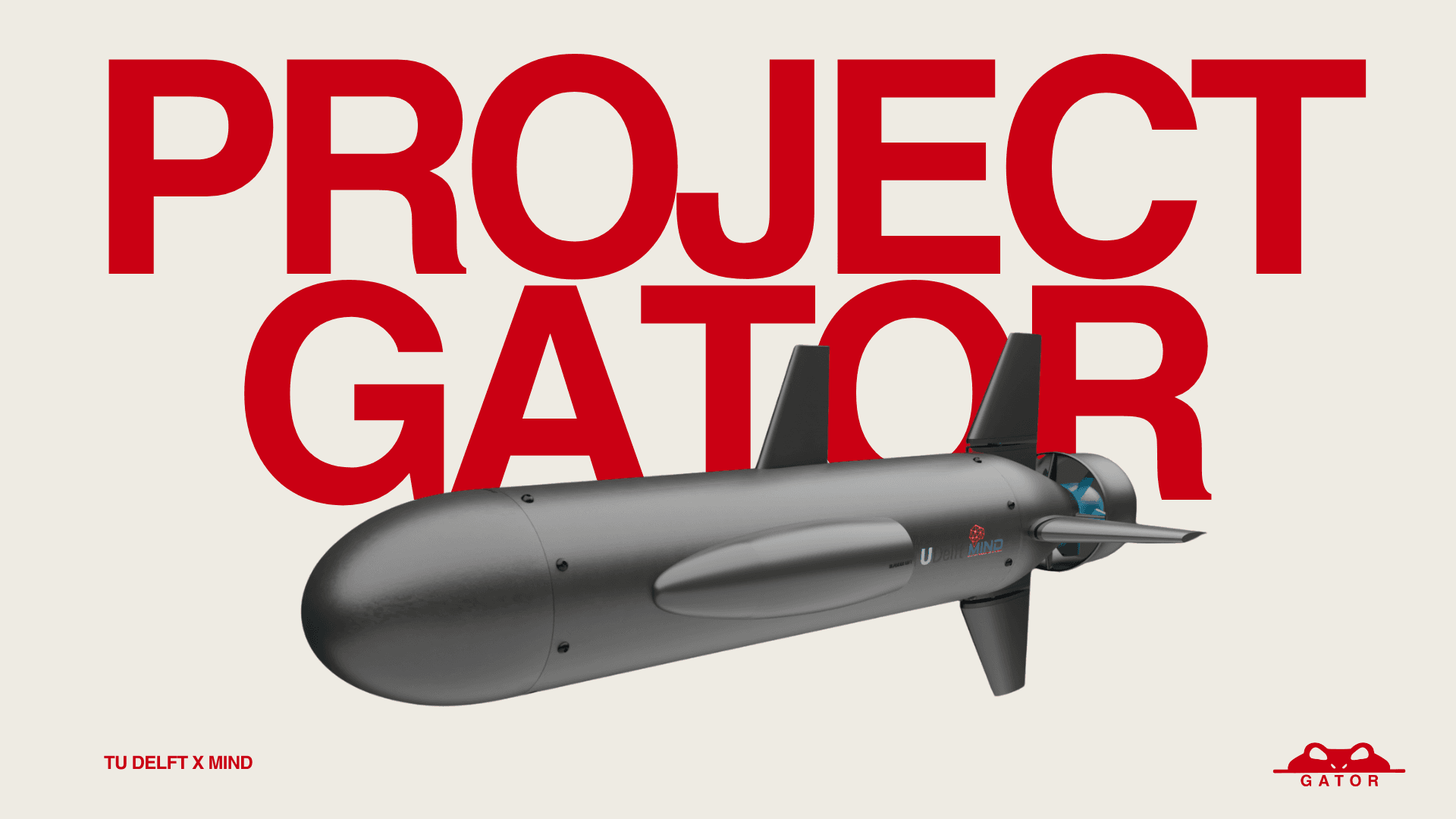
In recent years, Unmanned Underwater Vehicles (UUVs) both autonomous and operated, have become integral to maritime surveillance and operations, sharing technological principles with aerial systems.
The objective of this project was to produce a refined prototype through iterative engineering and testing that demonstrates the core hibernation concept. This was achieved through the integration of a buoyancy control system and easy to deploy mechanism.
Industrial Designer


" height="61px" id="F8IVn2C7k" width="200px"/></svg>)
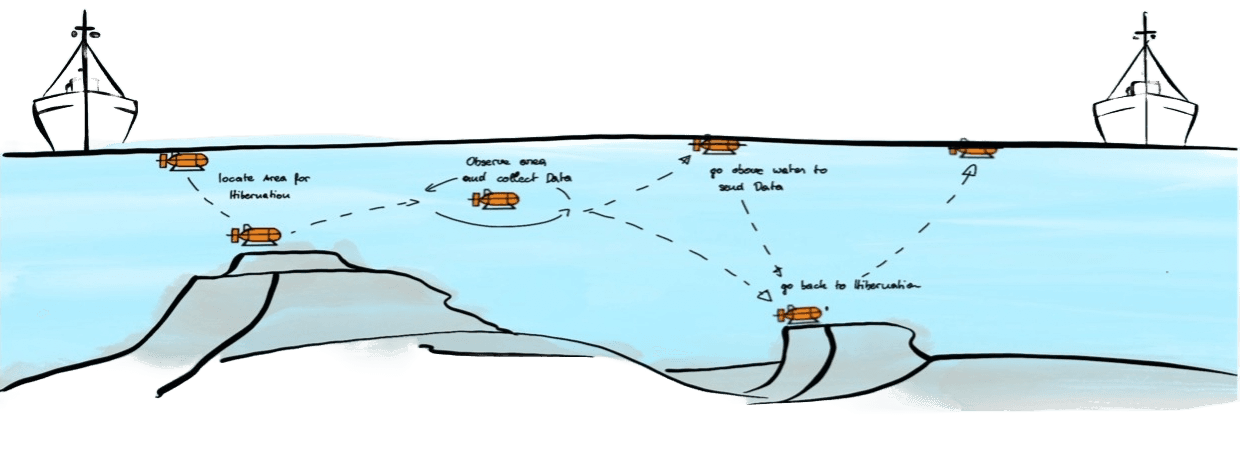
Loitering drones offer tactical advantages by remaining near potential targets without requiring continuous human deployment or retrieval. This project applies that concept to a compact underwater drone designed to fit in a backpack. The system is intended to loiter underwater, collect data, autonomously transmit information after deployment and resurface on command.
Requirements
Deployment time within 5 minutes
Controlled closed volume changing system
Wireless connection/ autonomous steering
Must fit in standard military backpacks
Must support independent modules that can be swappable.
Prototyping
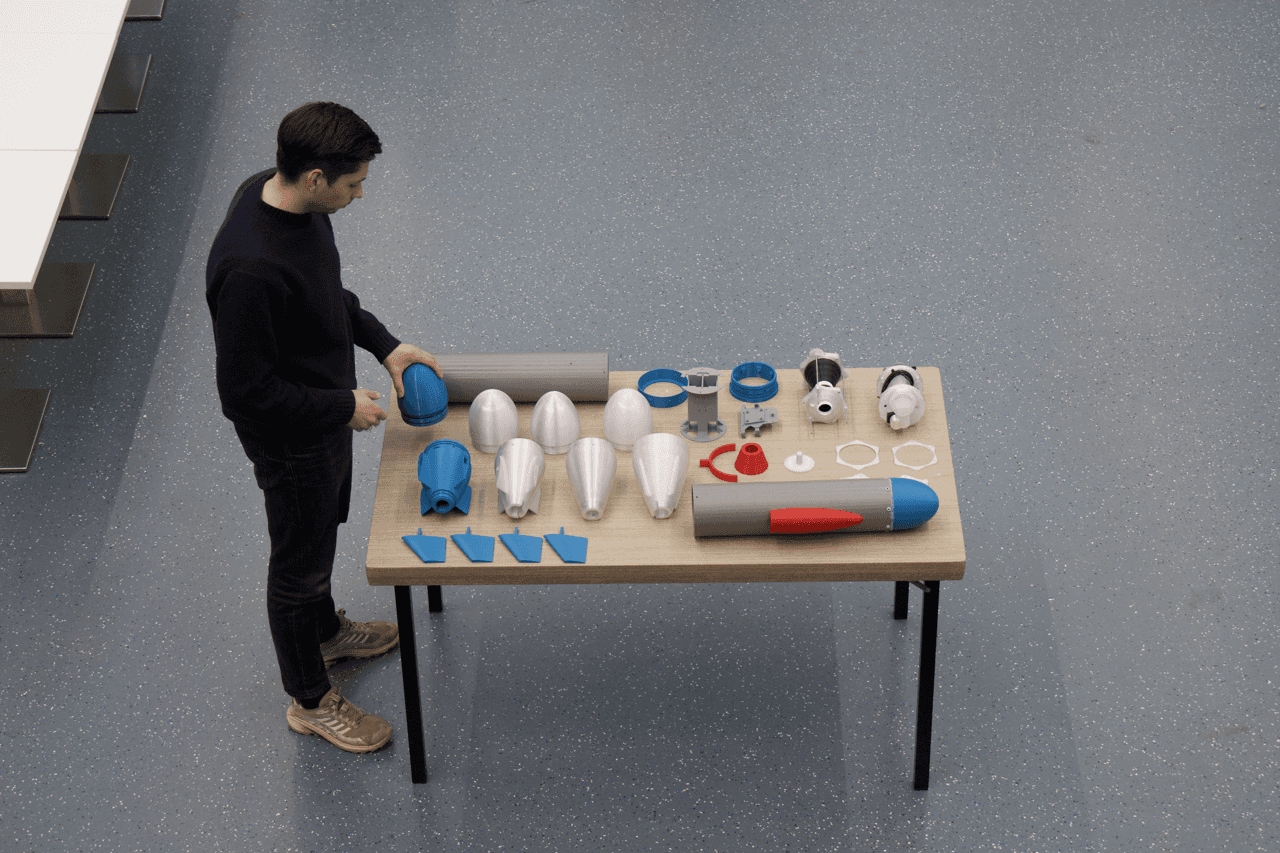
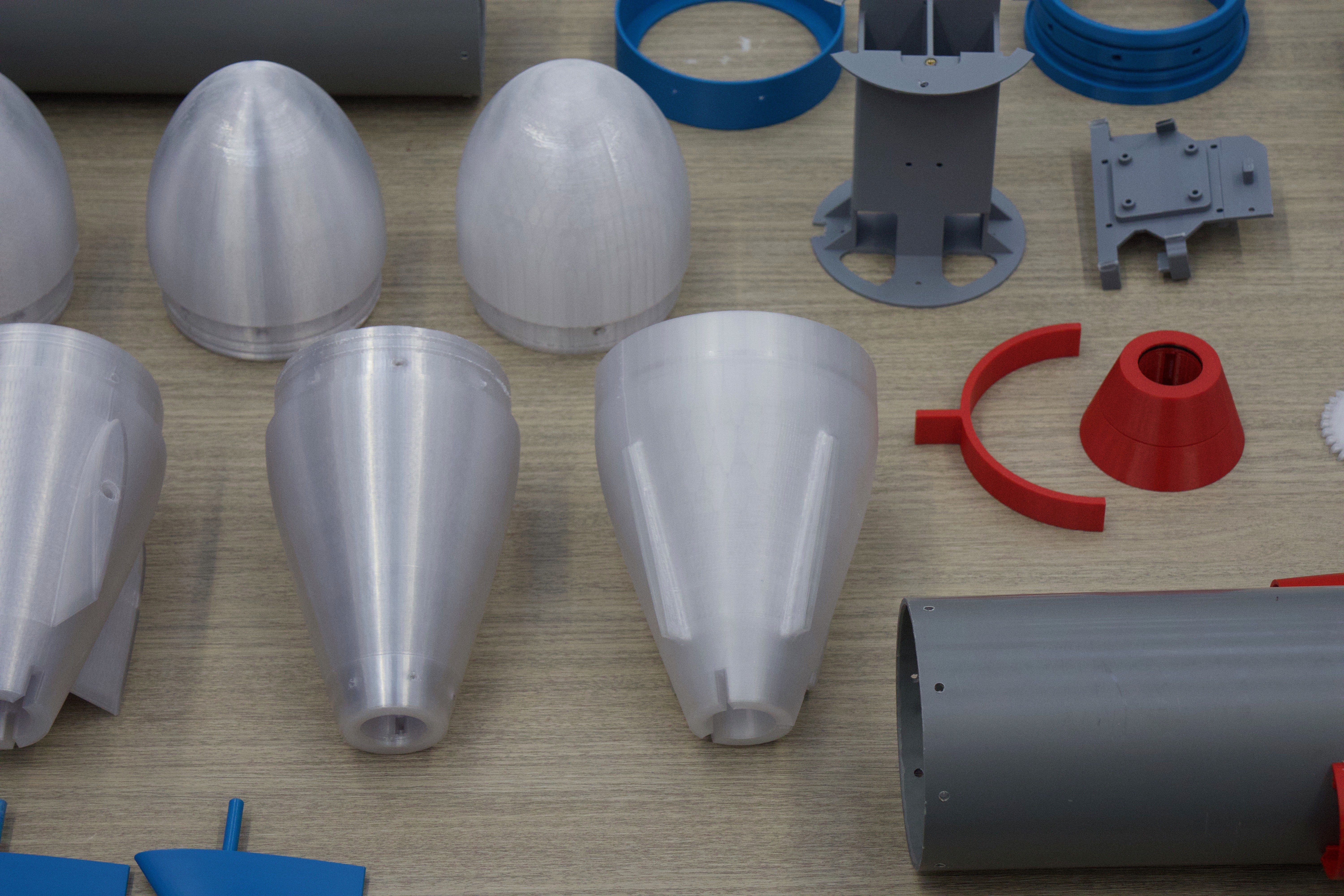
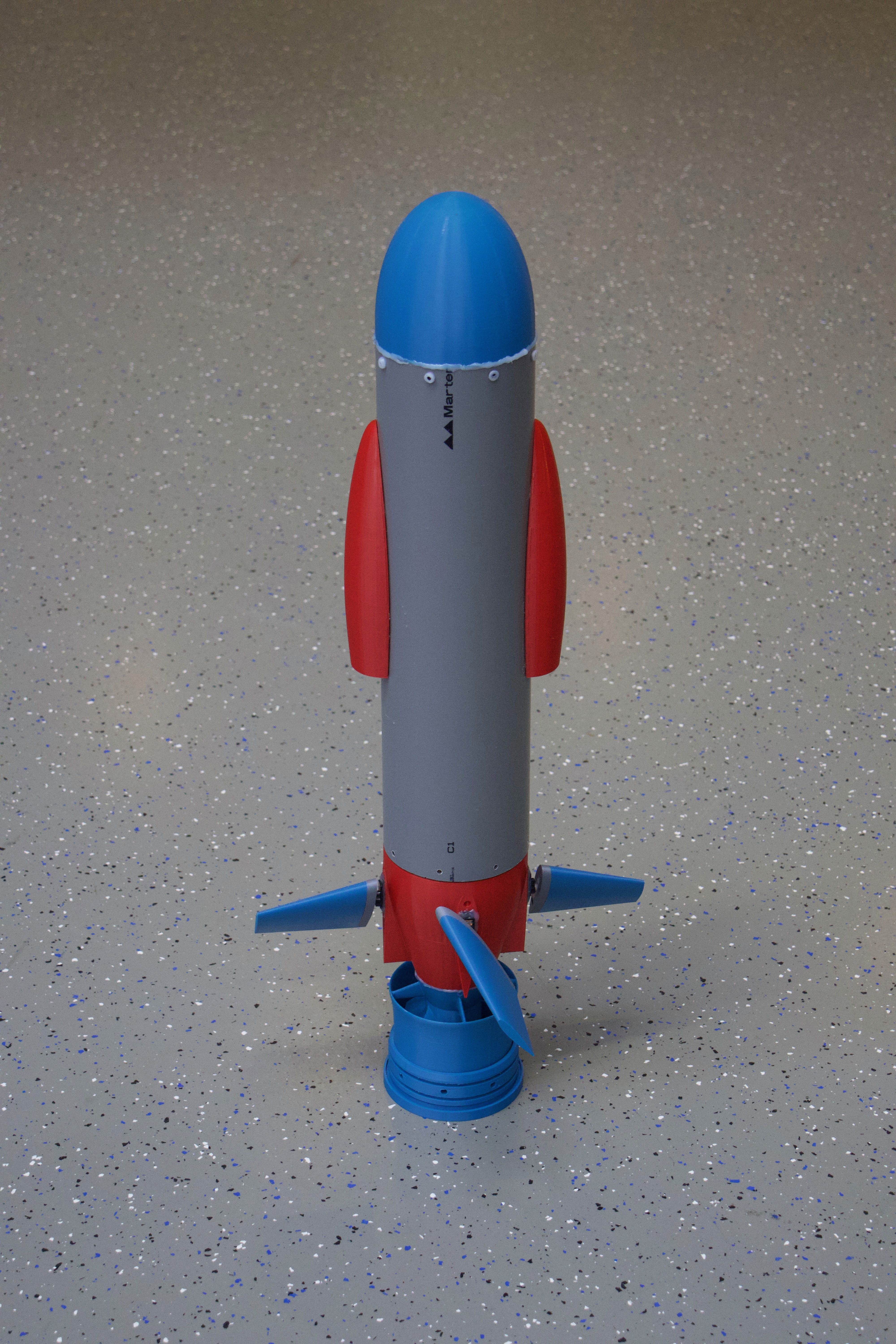
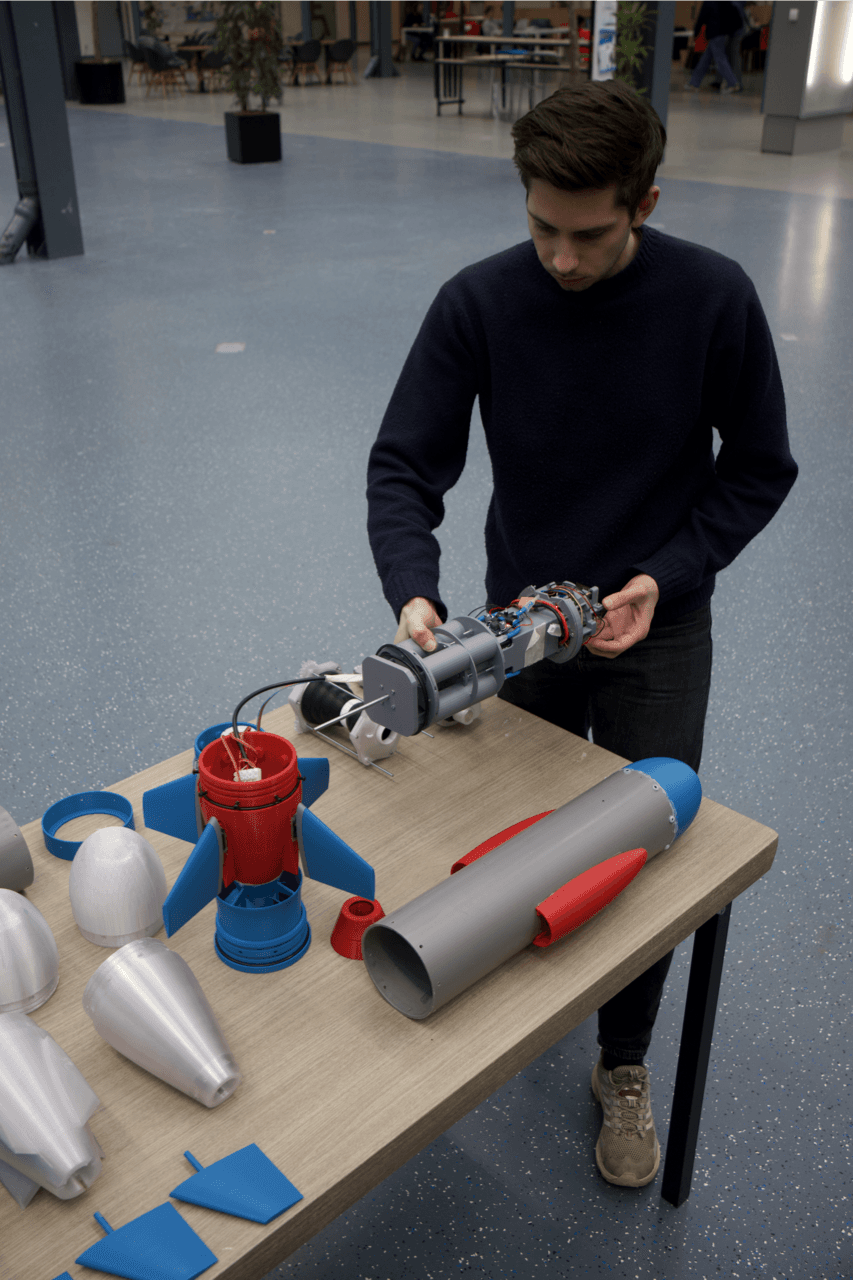
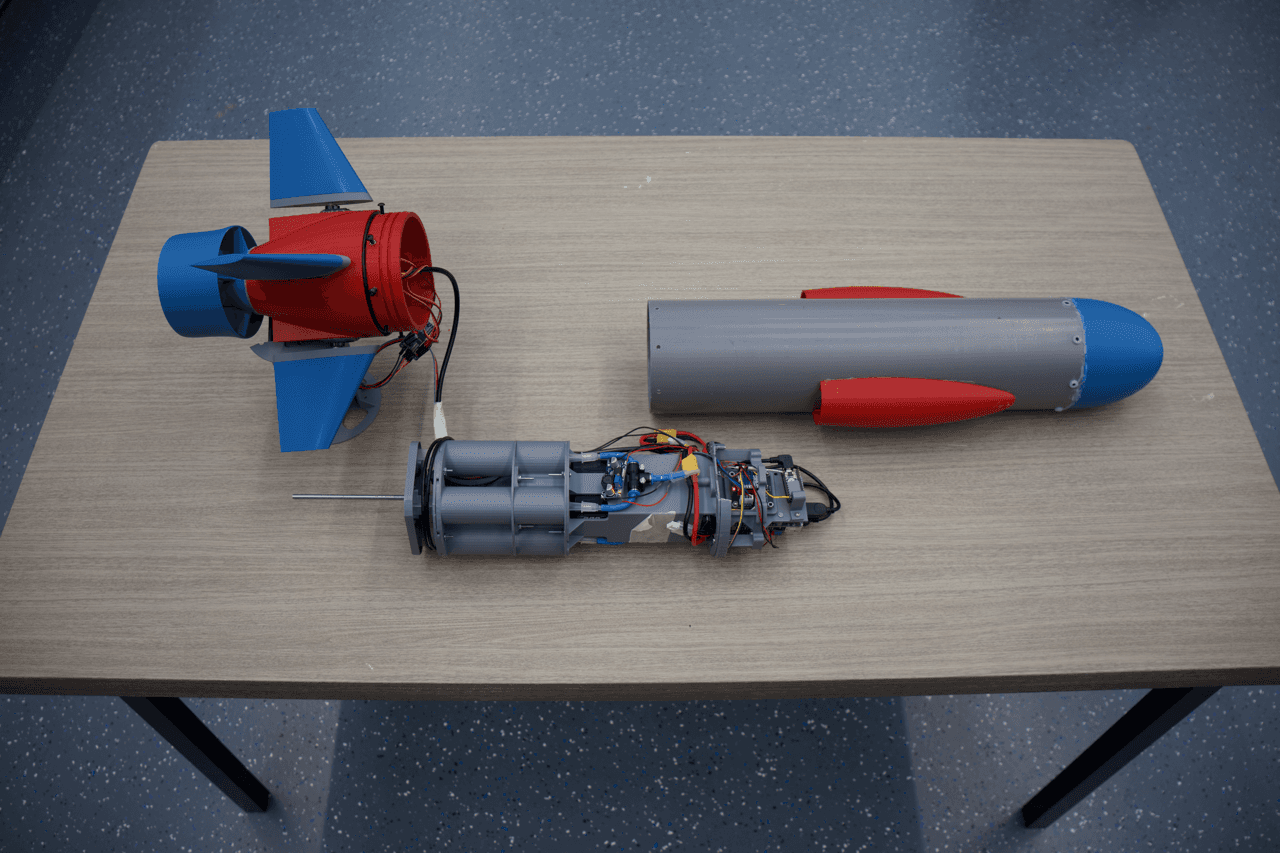
This project relied heavily on an iterative process of creation and testing. Especially, to fit the different off the shelf components together in a confined space to keep the overall volume down required finetuning. This ultimately resulted in the desired small size (which fits in a standard military backpack) and a fully functional proof of concept.
Testing
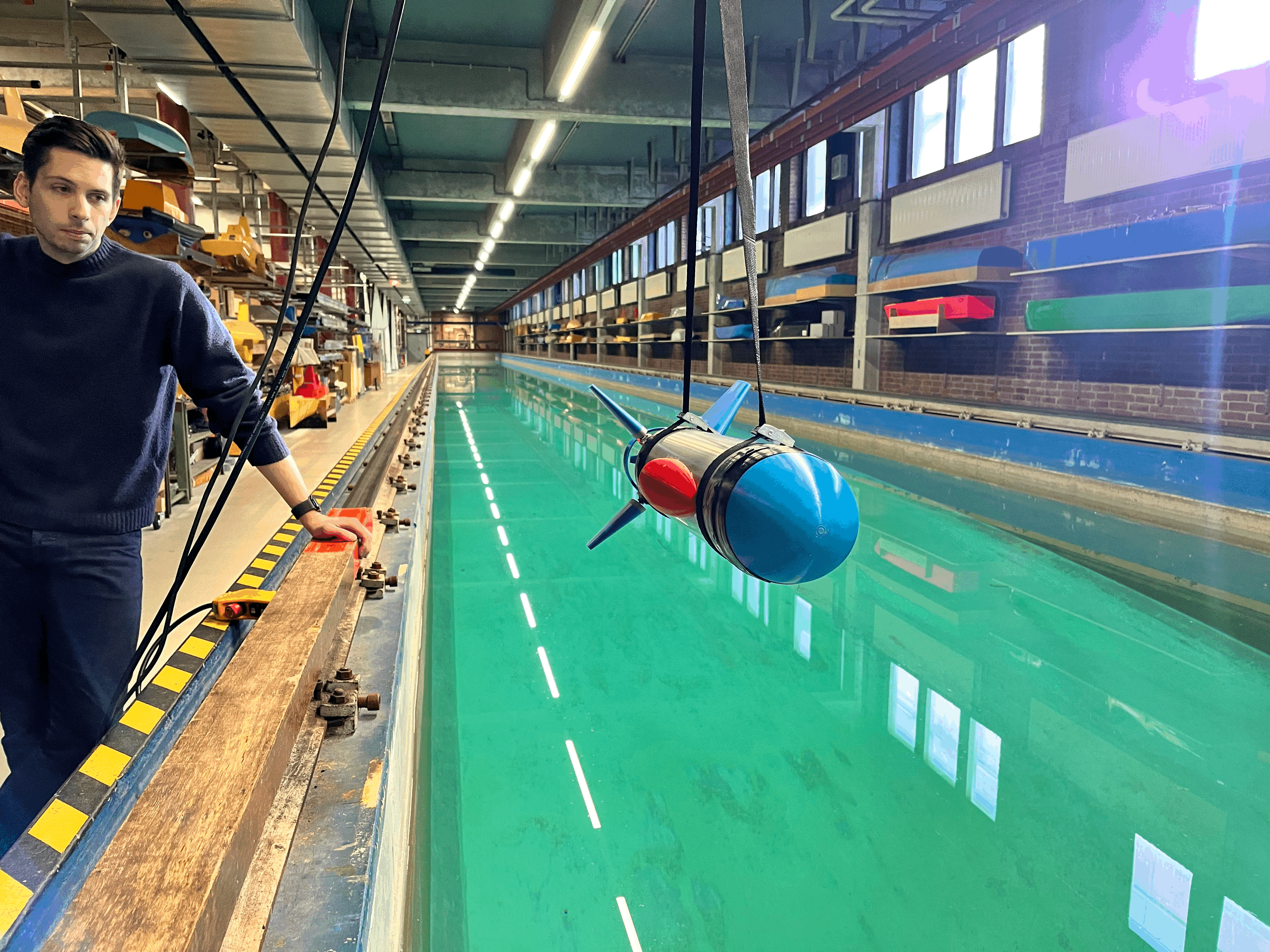
Inside a controlled maritime testing basin the buoyancy control, propulsion and steering were tested. Results highlighted the need for different (higher density) materials for the outer hull. This increases the density needed for neutral buoyancy and avoid leakages of 3D printed materials.
Insights
Minor leakage
Additional mass needed
Needs control buttons on exterior
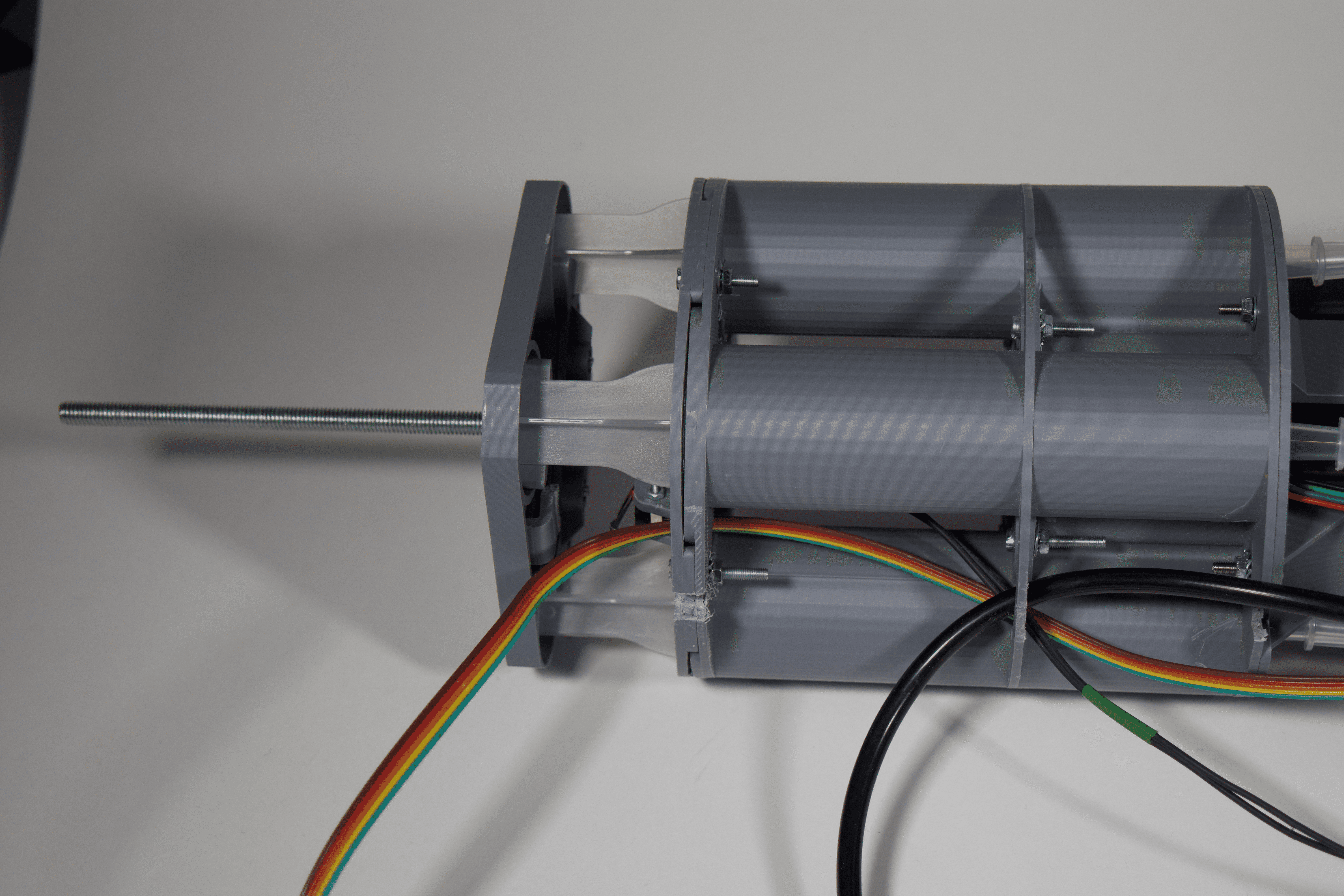
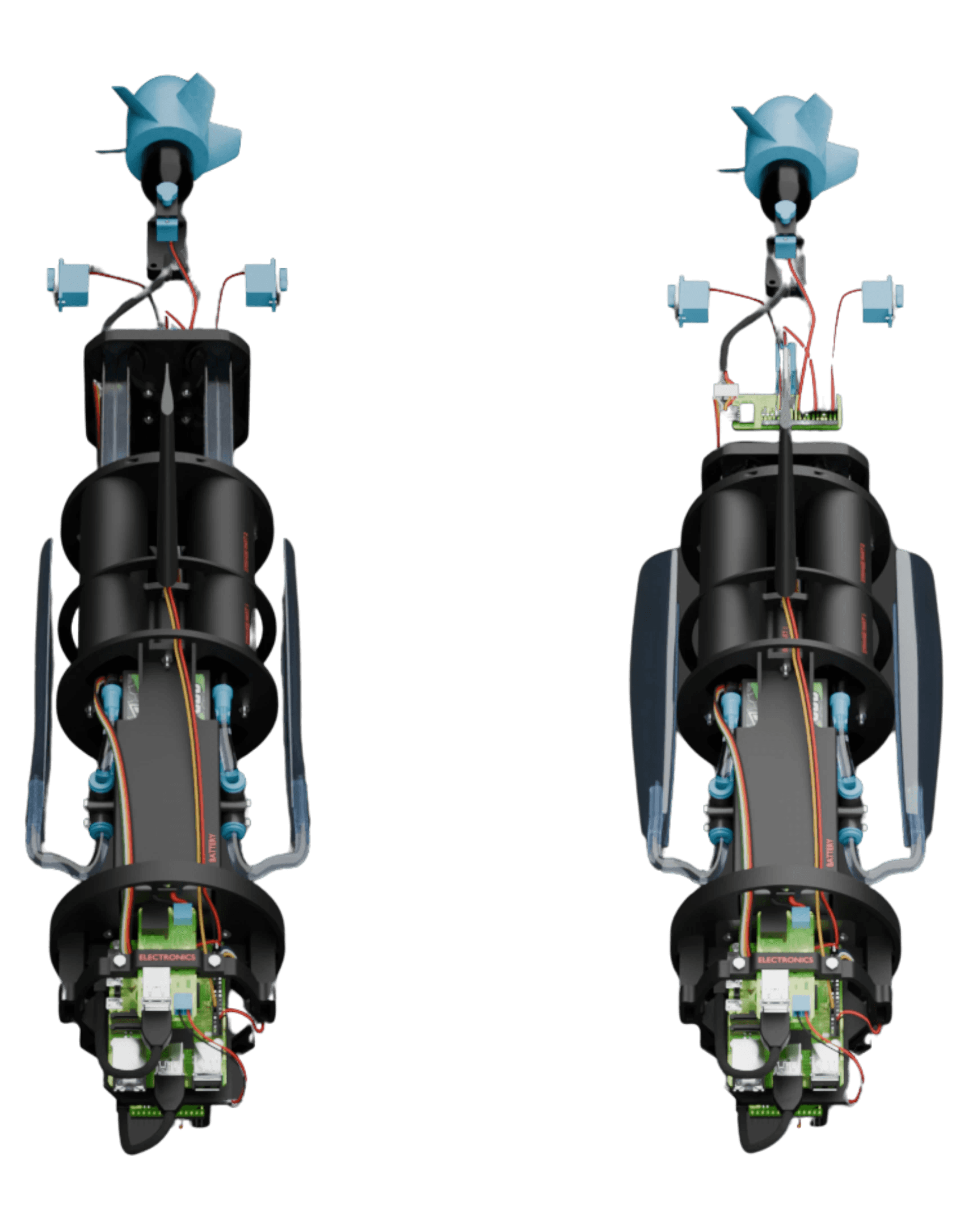
Buoyancy engine with inflated external bladders.
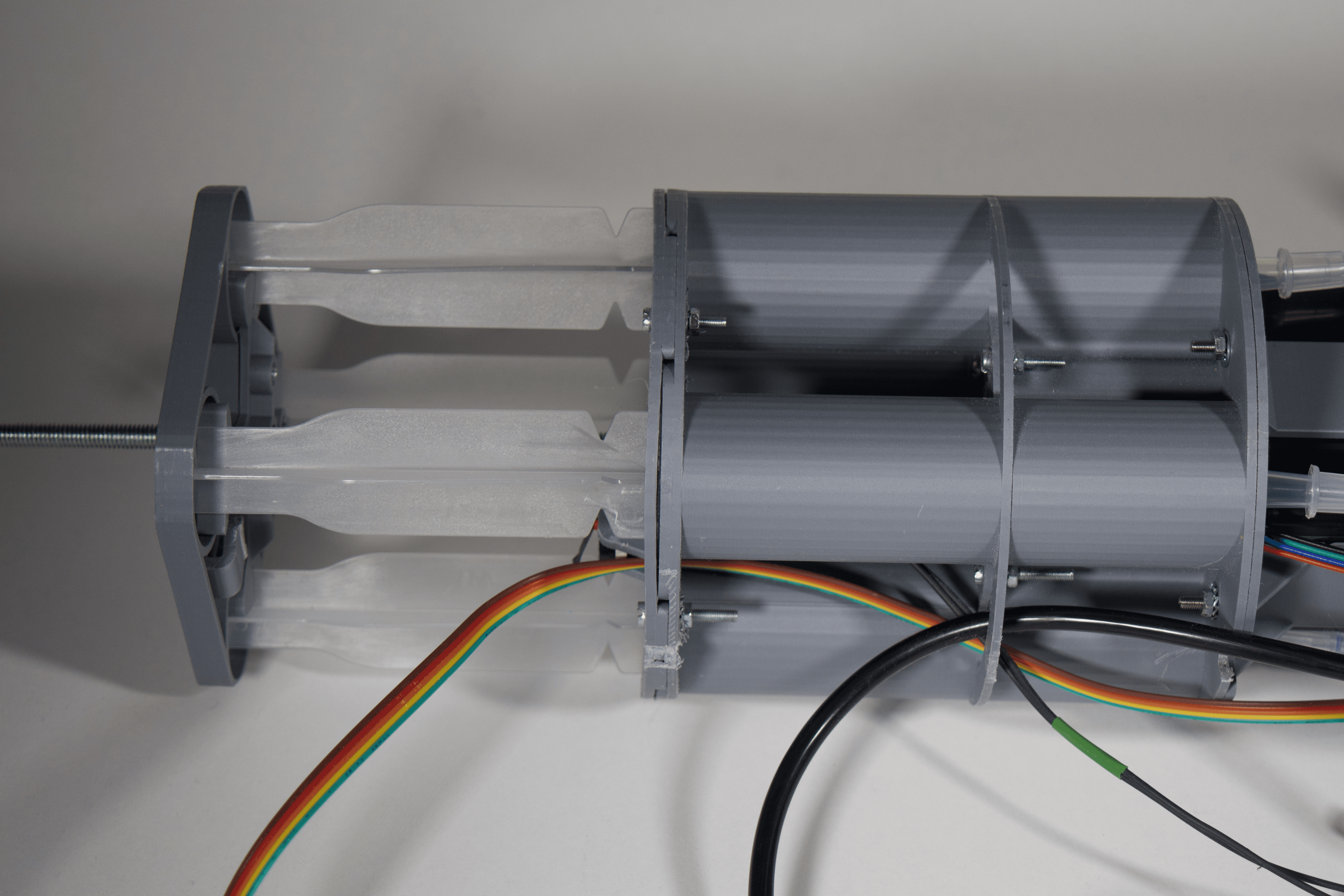
Buoyancy engine with deflated external bladders.
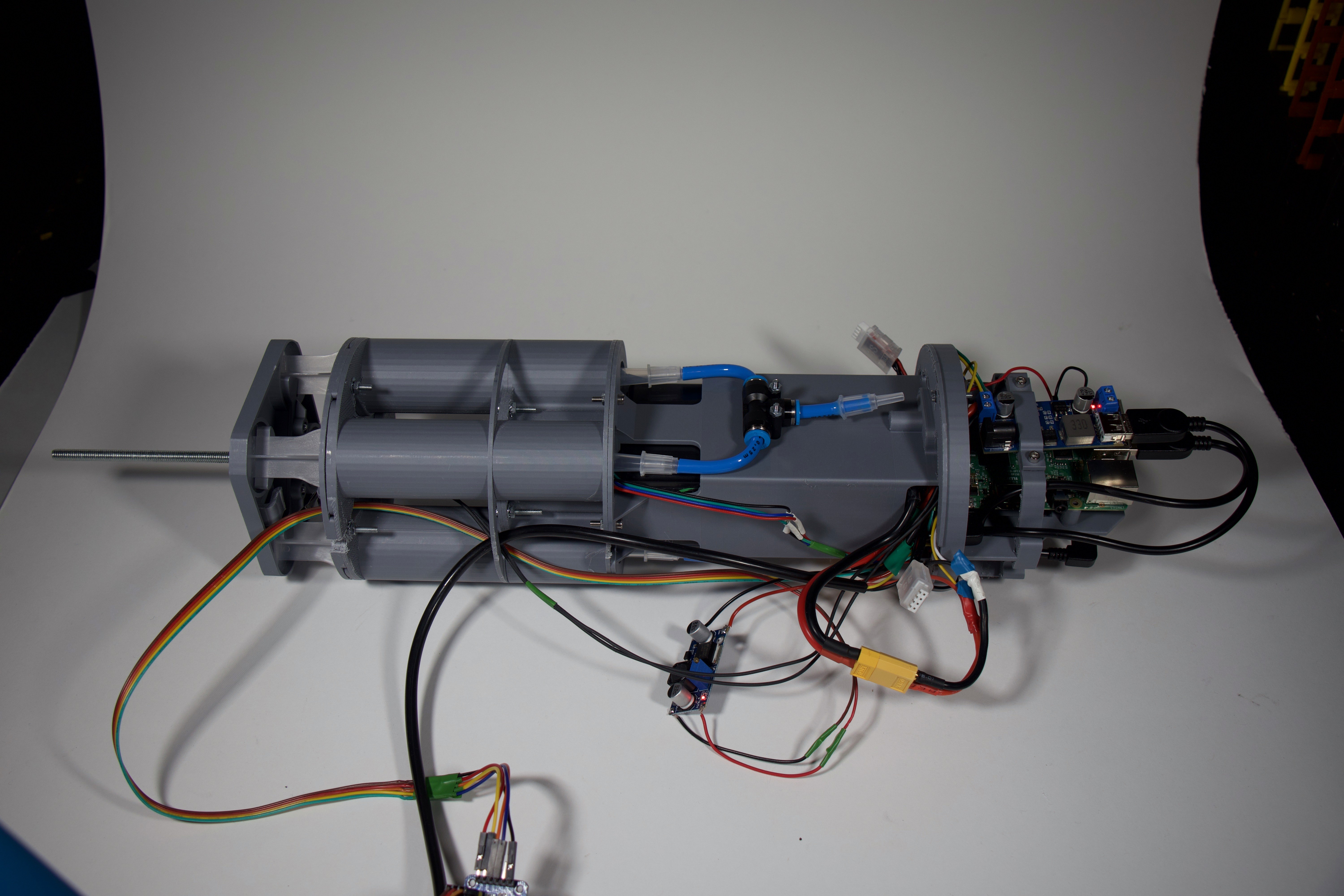
Complete assembly of buoyancy engine.
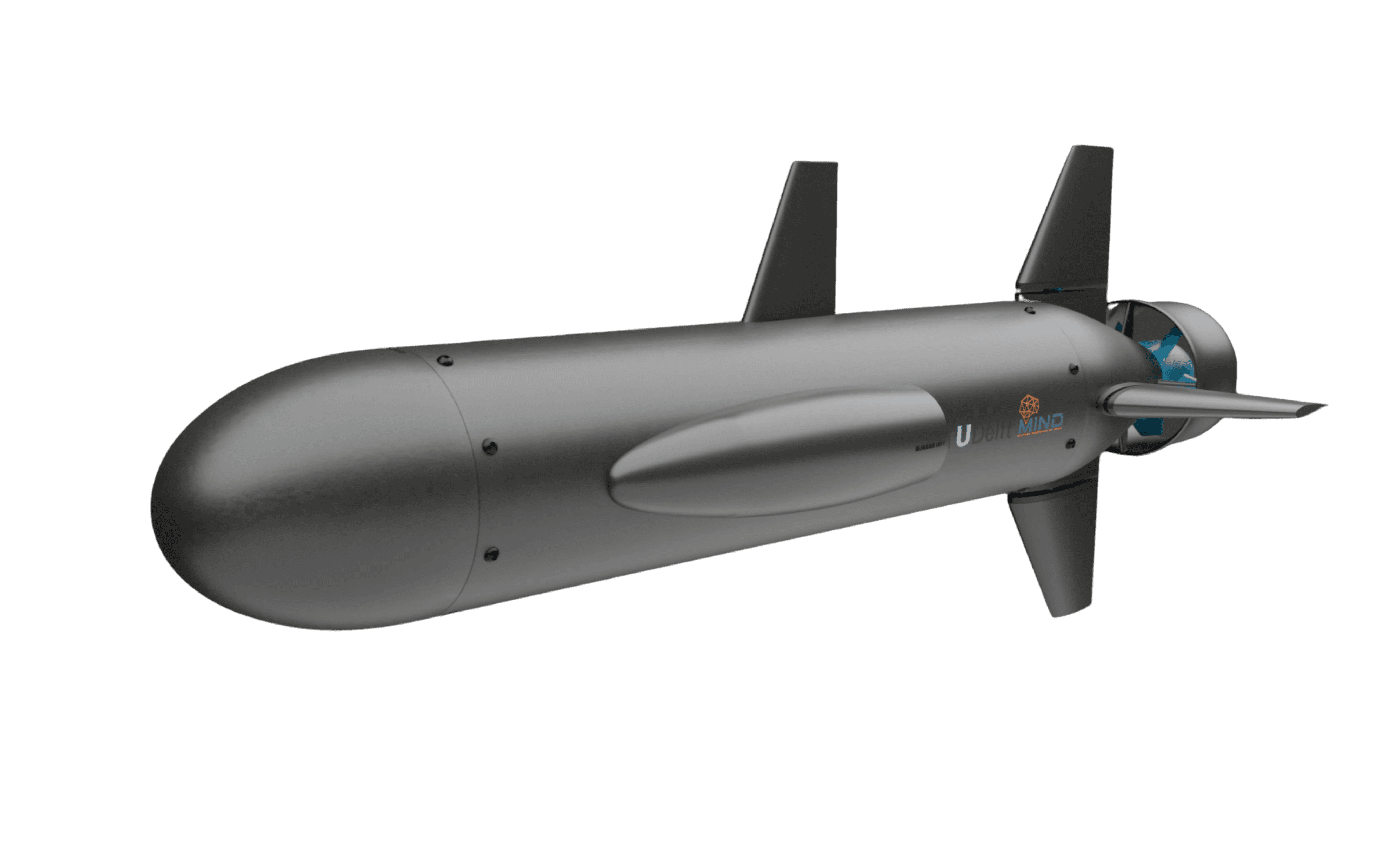
The drone autonomously navigates to the desired location, can enter the hibernation state, and executes the preprogrammed loitering actions. This reduces the operator’s exposure to danger. Once the hibernation state is activated it can stay there for days or weeks due to the low energy mode. It can be programmed to surface at a predefined location, allowing recovery without the risk of hostile locations.
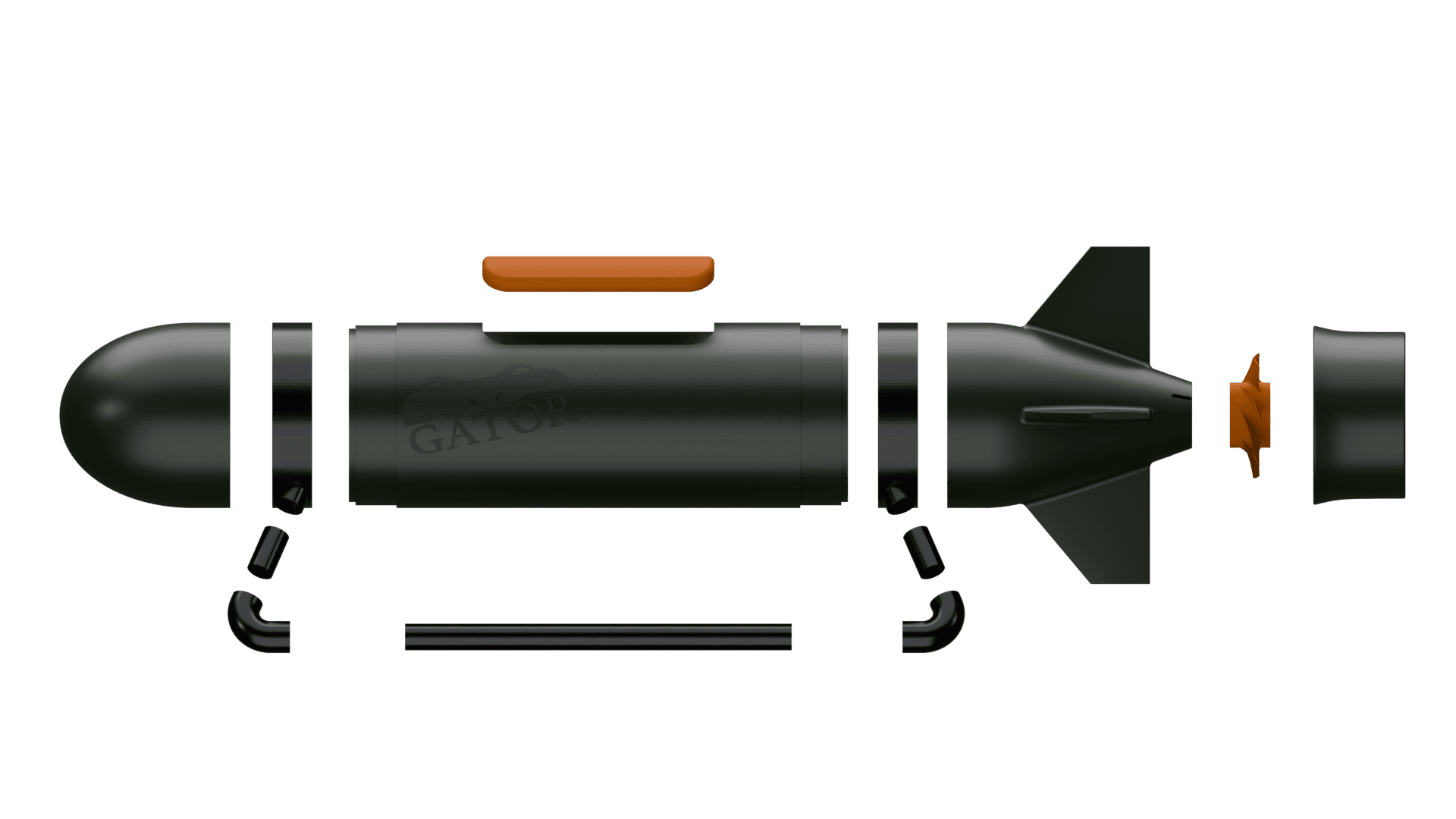
The UUV is designed as a platform rather than a fixed-purpose device. Consequently, the modular payload allows the attachment of different sensors or cameras without altering the core design. This ensures that operators interact with a consistent base system, with only certain modules that can change depending on the specifications of the mission, reducing the setup time and risk of incorrect installation.
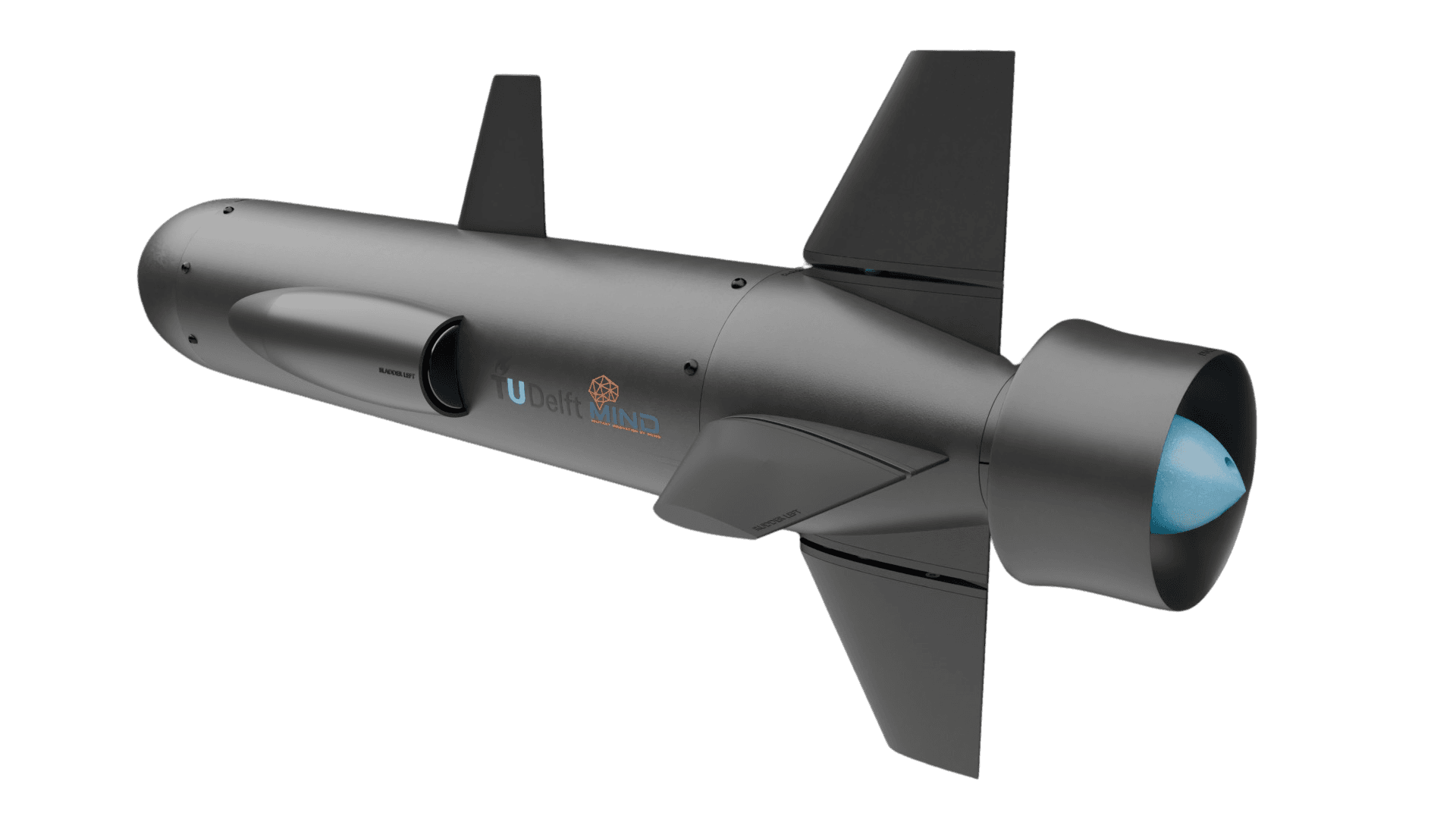
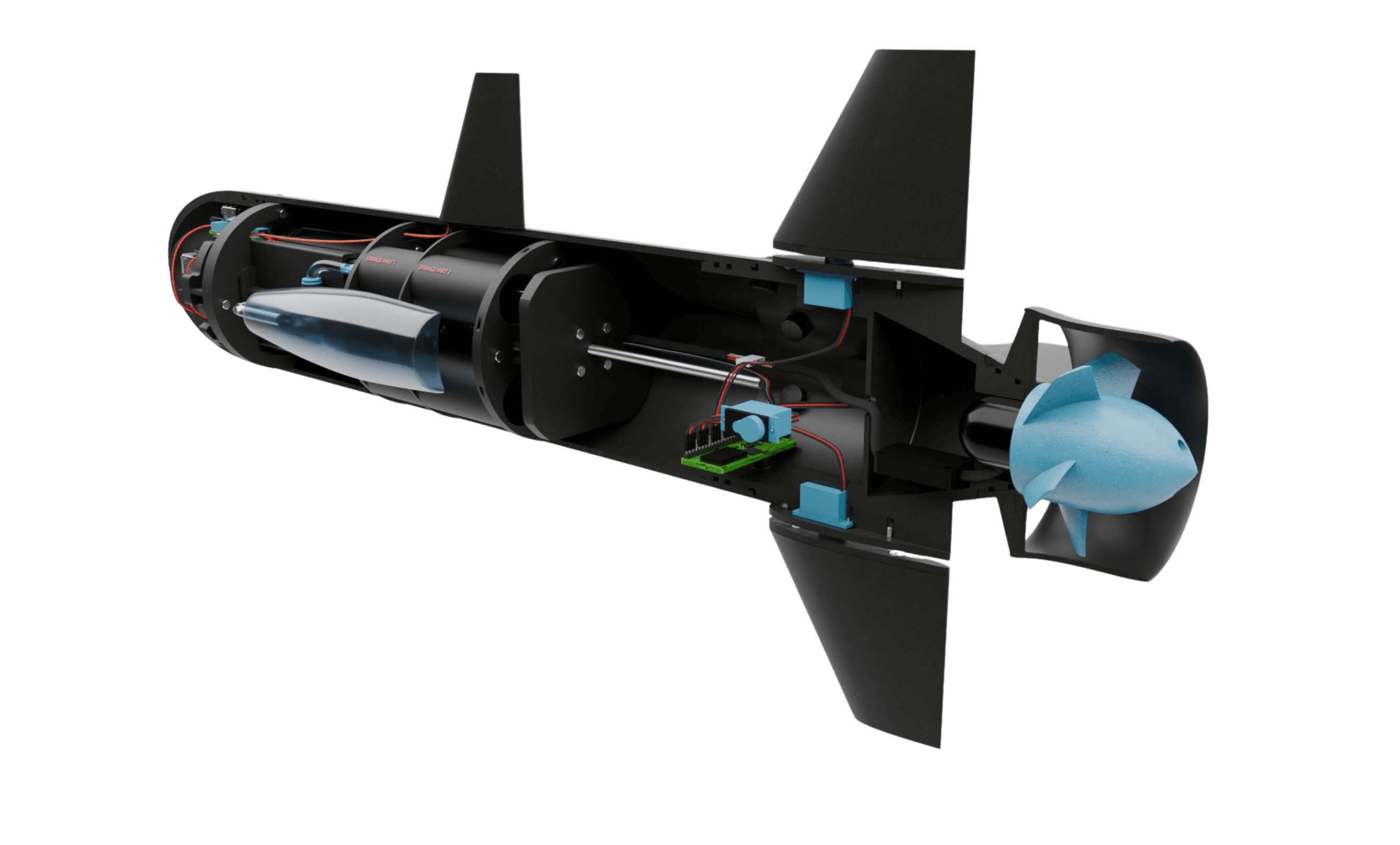
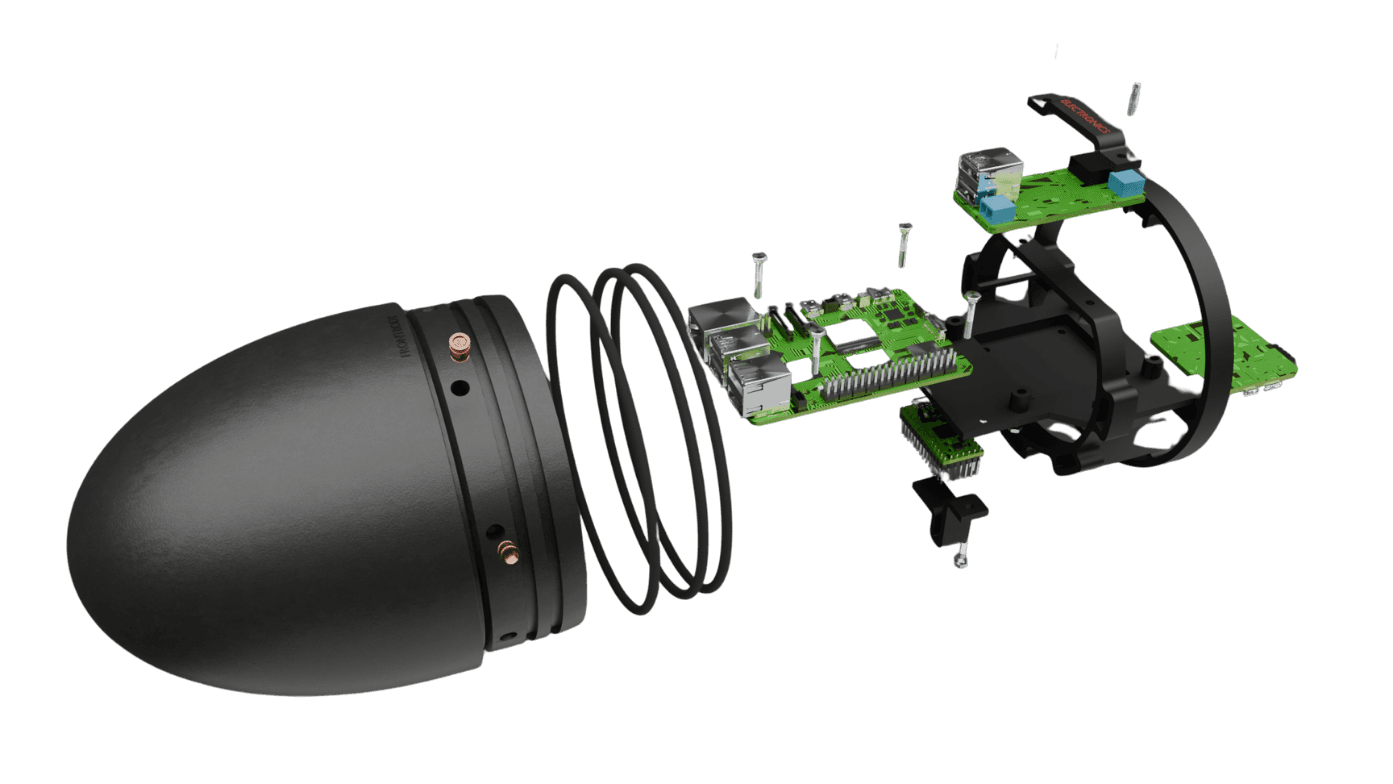
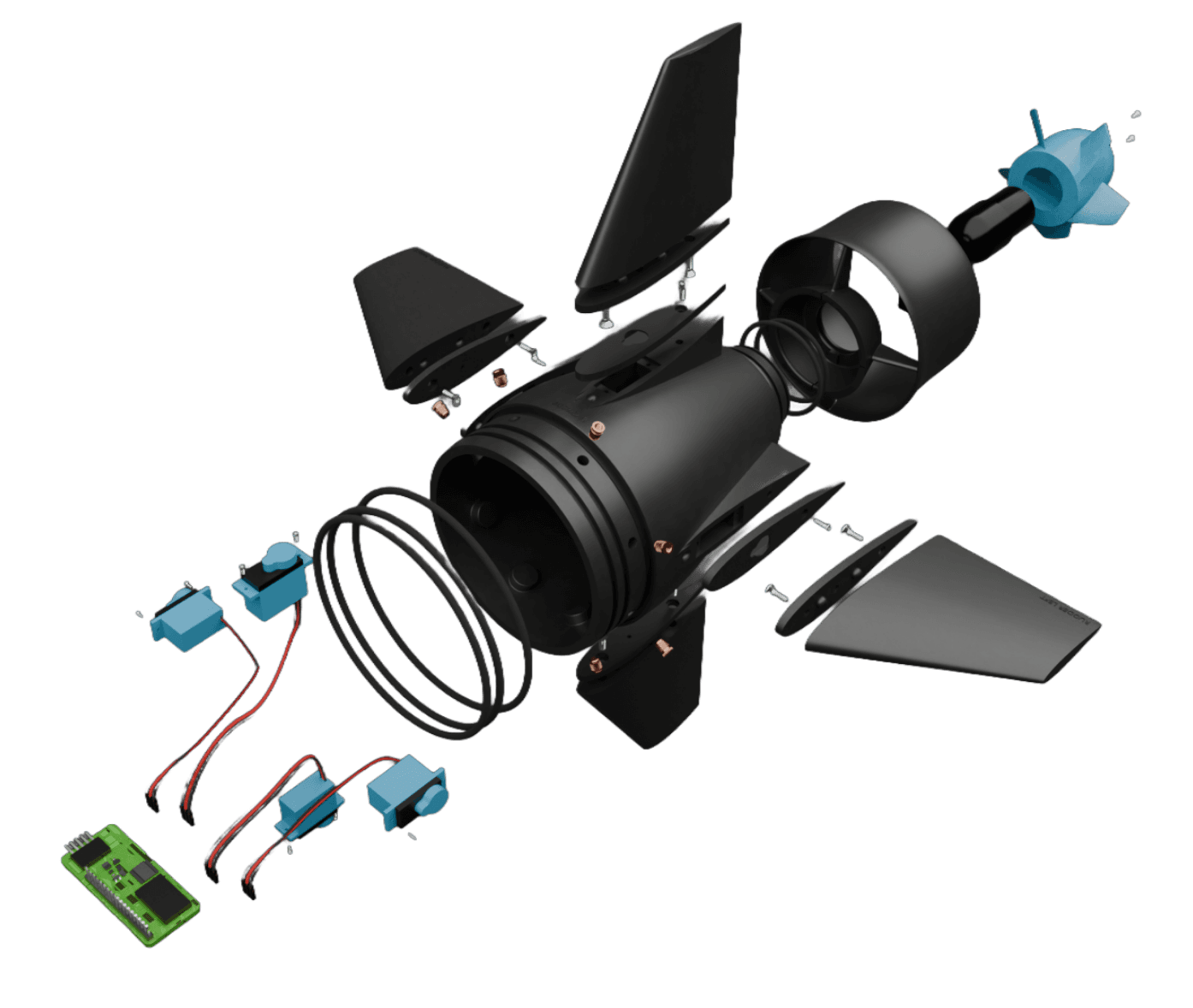
The drone is designed with modularity in mind. Making it possible to quickly adapt to different scenarios and easy to repair if needed.
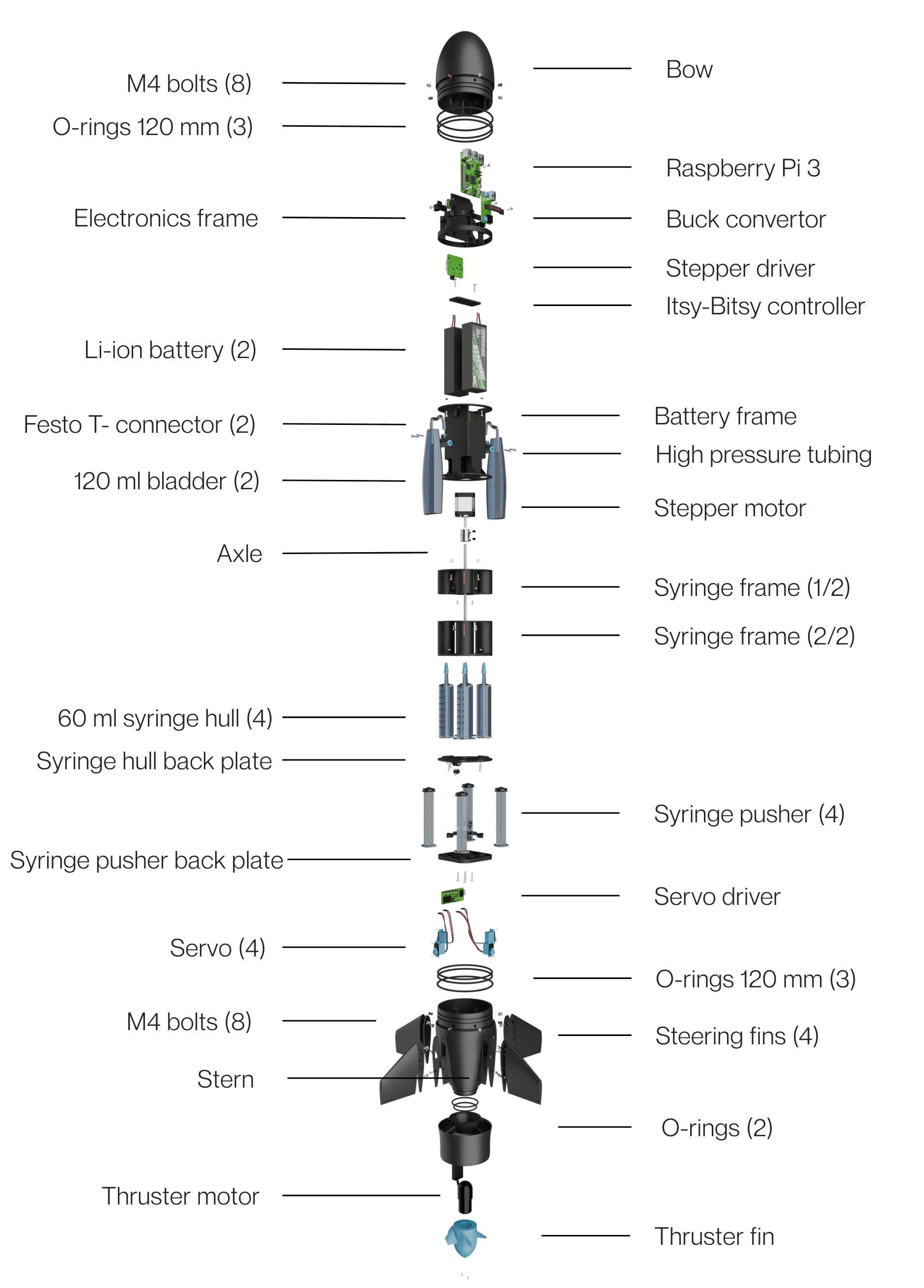
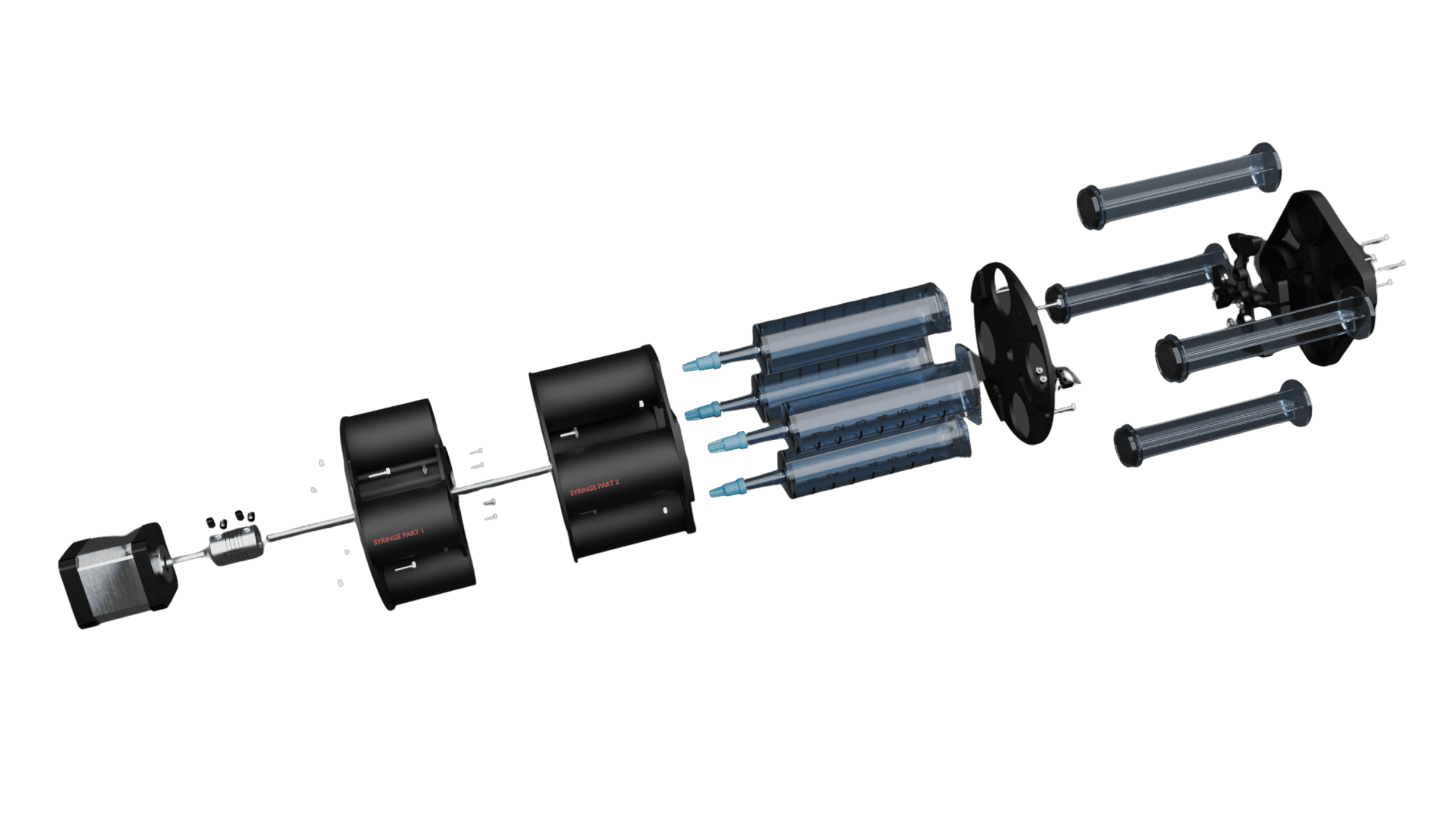
The buoyancy engine controls the inflation and deflation of the outer bladders by filling them with liquid. This results in an increased or decreased volume of the drone which impacts and therefore increases or decreases the density of the drone. This makes it possible to precisely control the depth at which the drone operates.